False Codling Moth (FCM)
Thaumatotibia leucotreta
The Challenge
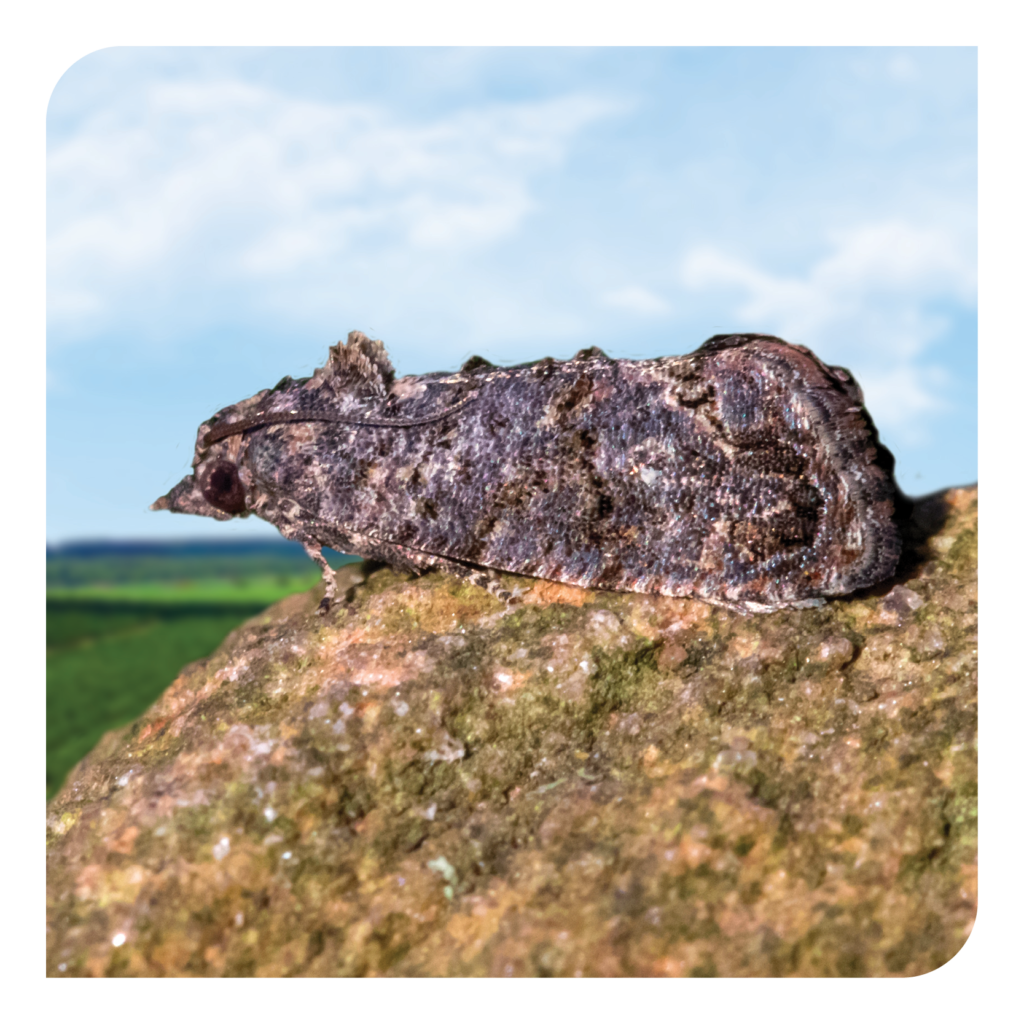
False Codling Moth (FCM) is a pest species well-known to both local and international fruit producers for the damage they inflict on fruit, which can cause significant loss to crop yields and the producer’s return on investment. Phytosanitary implications can have an effect on exporting fruit in certain markets.

FCM Life Cycle
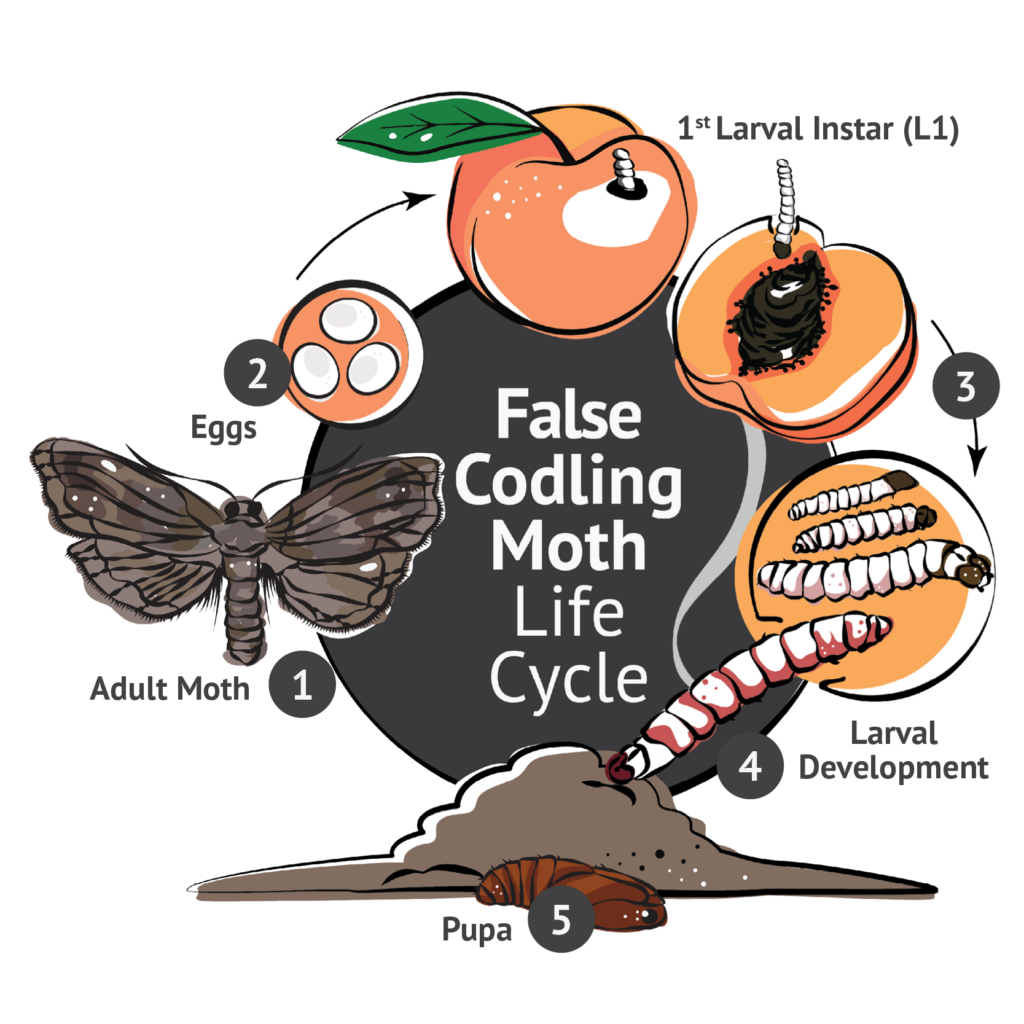
- Moths begin laying eggs 2-3 days after emergence & can lay 100-400 eggs in their lifetime.
- Eggs are laid on the fruit surface. Larvae bore into fruit after hatching.
- L1 – L5 develop within the fruit, feeding on the soft pulp for 35-67 days.
- L5 leaves fruit to pupate in the soil.
- FCM pupate for 29-40 days in winter & 21-24 days in summer. Pupae are contained within a tough silken cocoon in the soil.
How Does FCM Damage Your Crops?
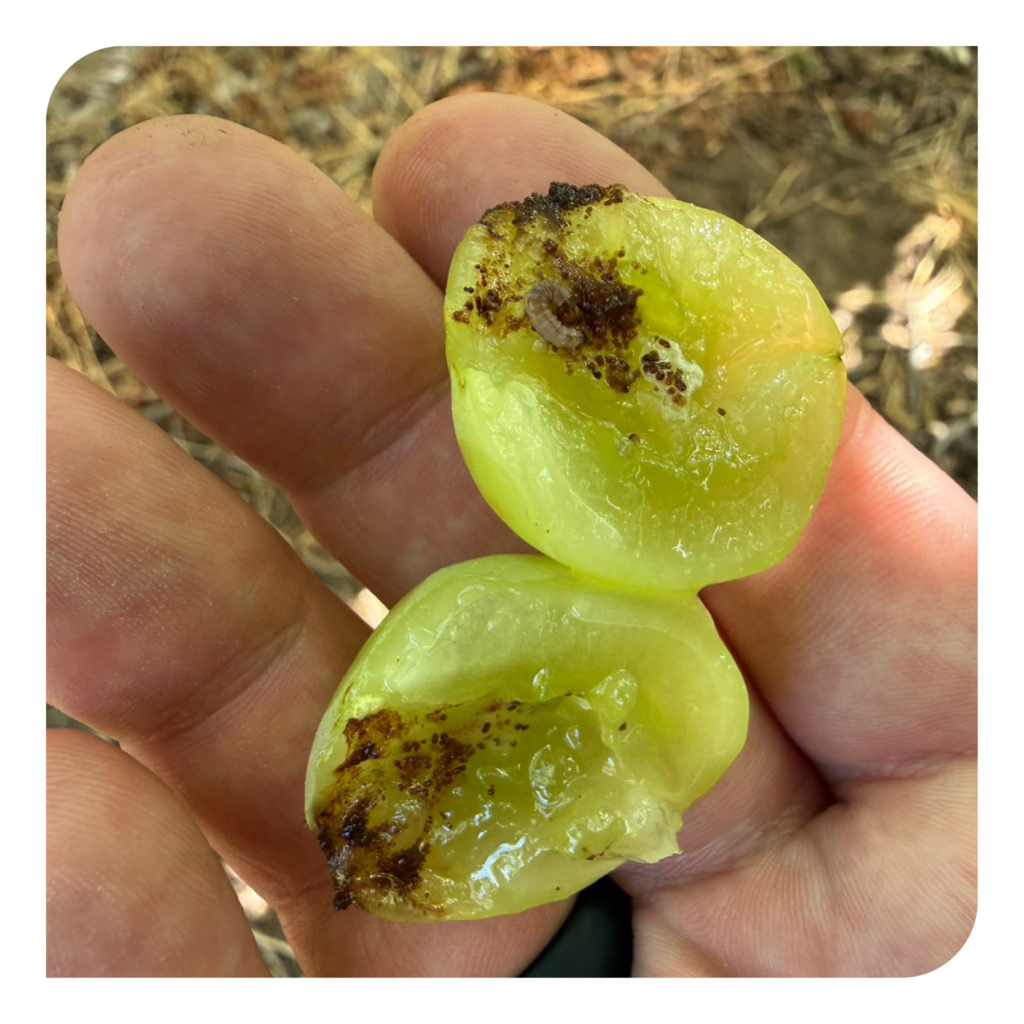
- Newly hatched larvae penetrate the fruit.
- Larval penetration holes in fruit can only be found with the aid of thorough inspection.
- On ripe fruit, penetration holes eventually become sunken and brown as damaged tissue decays.
- An infested fruit usually falls from the tree three to five weeks after penetration by a larvae.
- In the packhouse, it is difficult to identify fruit that becomes infested shortly before harvest – leading to post-harvest decay and potential phytosanitary interceptions in receiving markets.